
Bipod vs Monopod vs Tripod: What Each Does for Your Rifle
A bipod supports the front of your rifle, a monopod supports the rear, and a tripod supports the whole rifle from a freestanding platform. For most prone and field shooting, the answer is a front bipod, often paired with a rear monopod, which is the system precision shooters run. A tripod is a different tool aimed at standing and seated positional shooting and glassing, and it is not something B&T makes. Knowing what each does keeps you from buying the wrong support for how you shoot.
These three get lumped together as rifle supports, but they solve different problems. This guide explains what a bipod, monopod, and tripod each do, when you would use one over another, why a bipod-and-monopod combination covers most precision shooting, and where a tripod fits. The goal is to match the support to your shooting, not to sell you the most hardware.
What does each one support?
The simplest way to keep them straight is by what part of the rifle they hold up, and from where.
Front, rear, or the whole thing: a bipod carries the front of the rifle, a monopod carries the rear under the buttstock, and a tripod carries the entire rifle on a freestanding three-legged platform. Bipods and monopods work together as a front-and-rear system; a tripod replaces both for certain positions.
- Bipod: front support, two legs near the fore-end. The foundation for prone and field shooting.
- Monopod: rear support, one adjustable leg under the buttstock. Holds elevation, pairs with a bipod.
- Tripod: full-rifle support on a freestanding platform. Built for standing and seated positional work and glassing.
When do you use a bipod vs a monopod?
This is the pairing most shooters actually decide between, and the answer is usually both. The bipod comes first; the monopod completes it.
Use the breakdown below.
- Start with a bipod: it is the primary support for prone, bench, and field shooting. If you buy one thing, buy this.
- Add a monopod for precision: it sets and holds rear elevation so the rifle returns to zero, ideal for long range and small targets.
- Run them together: a loaded front bipod plus a dialed rear monopod is the precision shooter’s platform.
- Skip the monopod if: you shoot fast, offhand, or close, where rear support adds little.
Where does a tripod fit, and does B&T make one?
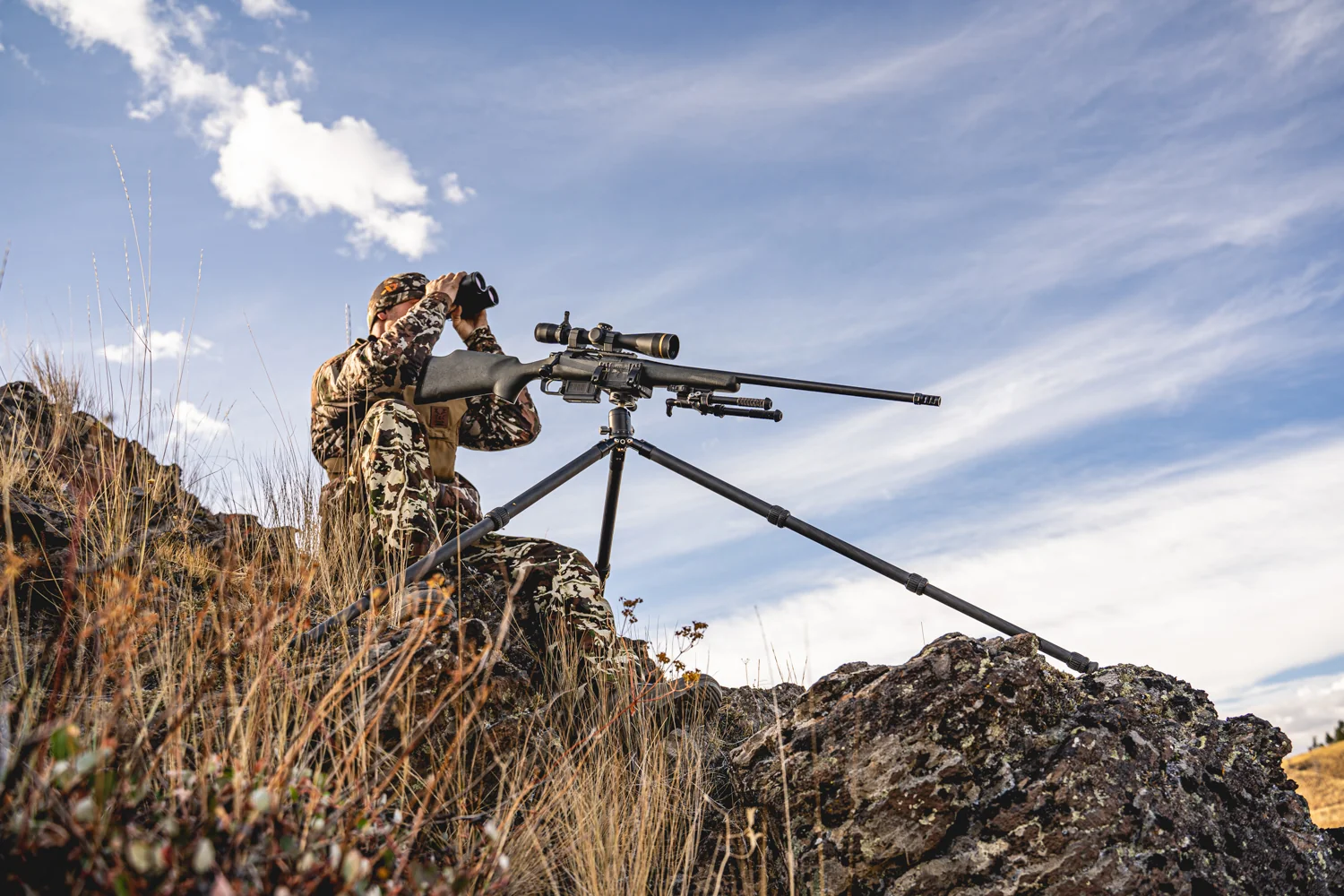
A tripod is the right tool for shooting standing or seated when you cannot get prone, and for glassing and spotting, common in certain hunting and positional contexts. It supports the whole rifle from the ground up rather than resting on the rifle itself.
B&T makes bipods and monopods, not tripods. If your shooting is mostly prone and field work, a bipod (with or without a rear monopod) is the more relevant choice, and it is lighter and faster to deploy. A tripod is worth considering only if standing or seated positional shooting is a real part of how you hunt or compete.
Which support should you choose?
Match the support to your most common position, and do not buy hardware you will not use.
Here is the simple decision.
- Mostly prone or field shooting: a bipod, the foundation. Add a monopod if you shoot precision.
- Precision and long range: a bipod plus a rear monopod, the full system.
- Mostly standing or seated, or heavy glassing: a tripod is the relevant tool (from a tripod maker; B&T does not make them).
- Unsure: start with a quality bipod, which serves the widest range of shooting.
Frequently Asked Questions
What is the difference between a bipod, monopod, and tripod?
A bipod supports the front of the rifle on two legs, a monopod supports the rear on one adjustable leg under the buttstock, and a tripod supports the whole rifle on a freestanding three-legged platform. Bipods and monopods pair as a front-and-rear system; a tripod replaces both for certain positions.
Should I use a bipod or a monopod?
Usually both, starting with the bipod. The bipod is the primary support for prone, bench, and field shooting; the monopod adds rear elevation that holds, which precision and long-range shooters want. Run a loaded bipod up front and a dialed monopod at the rear as a system.
Do I need a tripod for my rifle?
Only if you regularly shoot standing or seated where you cannot get prone, or do a lot of glassing. For prone and field shooting, a bipod, with or without a rear monopod, is lighter, faster, and more relevant. B&T makes bipods and monopods, not tripods.
Can you use a monopod without a bipod?
A monopod is rear support designed to work with a front bipod, not to replace it. Used alone it only holds the rear, leaving the front unsupported. For a stable, repeatable platform, pair the monopod with a front bipod so both ends return the rifle to the same point of aim.
What is the best rifle support for prone shooting?
A bipod, often paired with a rear monopod. The bipod gives the front a low, stable base for prone, and a monopod adds repeatable rear elevation. This front-and-rear setup is steadier for prone precision than a tripod, which is built for standing and seated positions.
Match the support to how you shoot
Bipod for the front and most shooting, monopod for the rear and precision, tripod only for standing, seated, and glassing. Most shooters are best served by a bipod, plus a monopod if they shoot precision.
Browse Atlas bipods and Accu-Shot monopods to build the front-and-rear system for your rifle.
* * *