

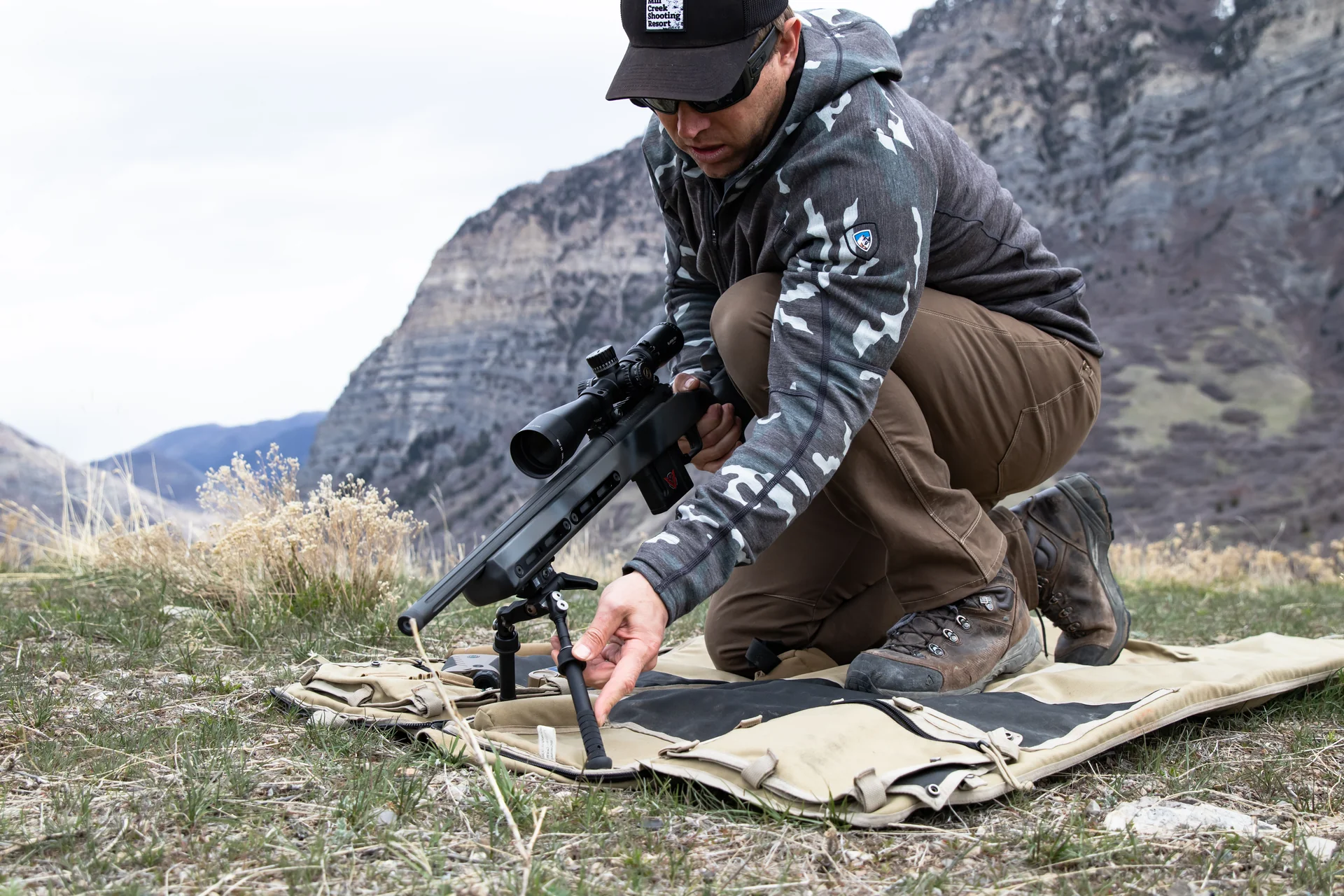
Does a Monopod Affect Your Rifle’s Accuracy or Zero?
A monopod improves accuracy by holding your rear elevation steady, and it will not hurt your zero as long as you use it consistently. As rear support paired with a front bipod, the monopod gives the rifle a repeatable elevation it returns to shot after shot, which tightens groups at distance. The only caution is the same as with any rest: zero with the monopod set the way you will shoot it, so your point of impact matches your field setup.
Precision shooters add a monopod specifically to make their rear more repeatable than a hand-squeezed bag, so the accuracy effect is positive when the monopod locks solid. This guide explains how a monopod affects accuracy, whether and how to sight in with one, why a creeping rear leg is the thing to watch, and how it works with your bipod to hold zero. The principle mirrors the bipod: consistency is everything.
How does a monopod affect accuracy?
A monopod affects accuracy by stabilizing the rear of the rifle. With the front on a loaded bipod and the rear on a locked monopod, the rifle sits on fixed points and returns to the same point of aim instead of drifting as a rear bag compresses.
A locked monopod helps; a creeping one hurts. If the rear leg holds its setting, your elevation is repeatable and groups tighten. If it backs off under recoil, your point of impact wanders. Lock quality is the whole game with a monopod.
Can you sight in a rifle with a monopod?
Yes, and if you shoot with a monopod you should. Set the monopod to your normal shooting elevation, load the front bipod consistently, and zero off the same setup you will use in the field or at a match.
Confirm zero across a small group rather than a single shot, and make sure the monopod is locked solid before each shot so your rear elevation is identical. A monopod that is dialed and locked is one of the most repeatable rear supports there is.
What should you watch for with a monopod and zero?
The one thing that moves a monopod-supported zero is a rear leg that does not stay put. Unlike a bipod, where loading is the variable, a monopod’s risk is creep: the leg slowly backing off its setting under recoil.
Demand a solid lock: a quality monopod locks rock-solid at any setting and does not move shot to shot. If your elevation wanders between shots, suspect the lock first. This is exactly why monopod selection prioritizes lock quality over travel.
How do the bipod and monopod hold zero together?
Accuracy off a monopod is really about the whole platform. The loaded front bipod and the locked rear monopod both return the rifle to the same place, so the rifle behaves identically every shot.
Zero the system as a system: front bipod loaded, rear monopod set and locked, the same way you will shoot. Do that and the rifle returns to zero from both ends, which is the entire point of running rear support. See the how-to-use-a-rifle-monopod guide for the workflow.
Frequently Asked Questions
Does a monopod affect your rifle's accuracy?
Yes, positively, when it locks solid. As rear support paired with a front bipod, a monopod holds repeatable elevation so the rifle returns to the same point of aim, tightening groups at distance. A creeping rear leg hurts accuracy, which is why lock quality is the priority.
Can you sight in a rifle with a monopod?
Yes, and if you shoot with one you should. Set the monopod to your normal elevation, load the front bipod consistently, and zero off the same setup you will use. Confirm zero across a group, and make sure the monopod is locked solid before each shot.
Does zeroing on a monopod affect accuracy?
Not if it locks solid and you zero the way you shoot. The risk with a monopod is rear-leg creep, not the monopod itself. Set and lock the monopod, load the front bipod consistently, and your point of impact stays where you zeroed it.
Why does my elevation wander with a monopod?
Usually a rear leg that does not stay put. If the monopod backs off its setting under recoil, your elevation wanders between shots. Demand a monopod that locks rock-solid at any setting; suspect the lock first if your point of impact drifts vertically.
Should you sight in a rifle on a monopod?
If you shoot off one, yes. Zero with the monopod set and locked the way you will shoot, and the front bipod loaded consistently, so your zero matches your field setup. A dialed, locked monopod is one of the most repeatable rear supports available.
Lock it, load it, zero the system
A monopod helps accuracy when it locks solid and you zero the way you shoot. Set and lock the rear, load the front, and the rifle returns to zero from both ends.
Browse Accu-Shot monopods built to lock and stay locked, or see the how-to-use-a-rifle-monopod guide for the workflow.
* * *