

Authentic Atlas Bipod vs. Counterfeit: Bonus Features (Wright Project, Episode 2)
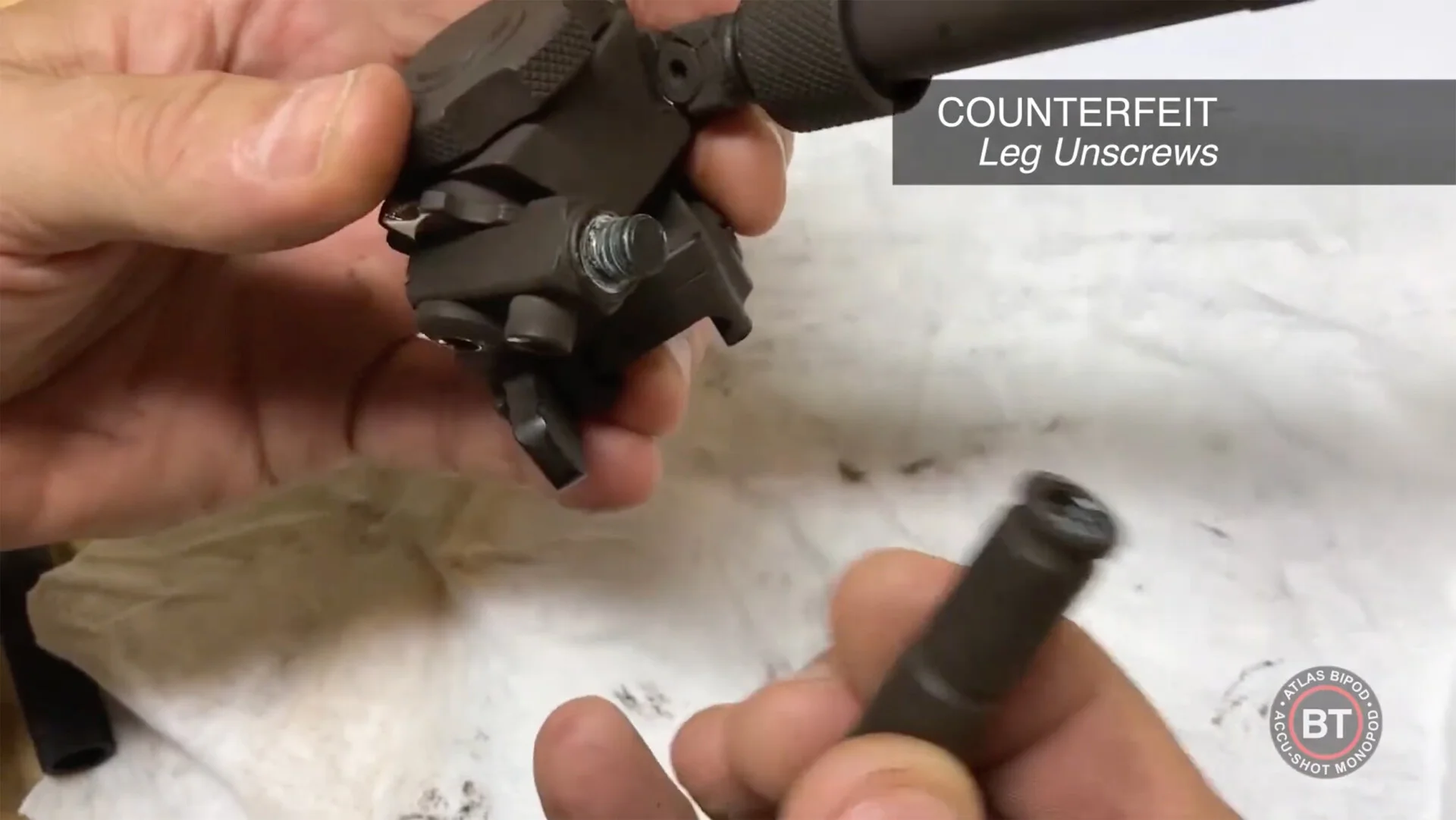
Where Episode 1 covered material and finish, Episode 2 of The Wright Project shows the functional differences: the mechanisms, hardware, and details a counterfeit Atlas bipod cannot copy. Counterfeits often mimic the look but fail on the parts that do the work, the leg detents, the tension and lock hardware, and the fasteners, so they feel loose, adjust poorly, or wear out fast. Watch the episode, then use the guide to check how your bipod actually functions, not just how it looks.
A fake can pass a glance and still fail a range session. This second episode focuses on the operating features that separate a genuine Atlas from a knockoff, and pairs with Episode 1 (material and finish) for the full picture. As always, buying from B&T or an authorized dealer is the surest way to get an authentic Atlas backed by the lifetime warranty.
Watch: Authentic vs. Counterfeit, Bonus Features
In Episode 2, the B&T team compares the working features of a genuine Atlas against a counterfeit: how the legs deploy and lock, how the adjustments feel, and how the hardware is made. These are the details that decide whether a bipod performs, and they are the hardest for a counterfeit to fake.
The written breakdown follows the same order as the video.
What functional features do counterfeits get wrong?
Counterfeits spend their effort on appearance, so the working parts are where they cut corners. Those corners show up the moment you operate the bipod.
Function is the honest test: a genuine Atlas deploys, locks, and adjusts with a specific, positive feel; a counterfeit is usually vague, loose, or gritty because the internal parts and tolerances are not the same.
- Leg deployment and detents: authentic legs click into their positions positively; fakes are often loose or imprecise.
- Tension and lock hardware: genuine cant, pan, and lock mechanisms hold under recoil; counterfeit hardware slips or strips.
- Fasteners and threads: real Atlas fasteners are hardened and fit precisely; fakes use softer screws that round off or strip.
- Overall fit: genuine parts move without slop; counterfeits have play you can feel.
Video transcript detail (to be added)
WRITER NOTE (delete before publish): insert the transcript-derived, on-camera specifics from Episode 2 here (the exact feature differences demonstrated). Align with the bullets above and do not name the company owner.
Why do the working parts matter more than looks?
A bipod earns its keep by doing the same thing every time under recoil, and that comes entirely from the working parts. A counterfeit that looks identical but has loose detents or soft hardware will not load, hold zero, or last.
This is why the price gap on a counterfeit is a false economy: you are paying less for a tool that fails at exactly the job you bought it for. A genuine Atlas is backed by a lifetime warranty precisely because the working parts are built to hold up.
How do you protect yourself from a fake?
Buy from B&T Industries or an authorized dealer, and function is guaranteed along with authenticity and the warranty. If you already own a bipod and something feels loose, gritty, or vague compared to what the video shows, compare it carefully and contact B&T.
Genuine Atlas hardware operates with a distinct, solid feel. If yours does not, the material and finish check from Episode 1 will usually confirm what the function already told you.
Frequently Asked Questions
How do counterfeit Atlas bipods differ in function?
Counterfeits copy the look but not the working parts. Genuine Atlas legs deploy and lock positively, the cant, pan, and lock hardware hold under recoil, and the fasteners are hardened. Fakes feel loose, gritty, or vague and use soft screws that strip. Episode 2 shows these differences.
Why do the working parts matter more than appearance?
A bipod’s job is to do the same thing every shot under recoil, and that comes from the internal parts and tolerances. A counterfeit that looks identical but has loose detents or soft hardware will not load, hold zero, or last, which makes its lower price a false economy.
How do I spot a fake Atlas bipod by feel?
Operate it. Genuine Atlas legs click into position positively, adjustments lock firmly, and there is no slop. Counterfeits feel loose, imprecise, or gritty, and their fasteners round off. If the function feels off compared to the Wright Project video, it is likely a fake.
Does the lifetime warranty cover counterfeit Atlas bipods?
No. The lifetime warranty covers authentic Atlas bipods from B&T Industries. Counterfeits carry no warranty, which is one more reason to buy from B&T or an authorized dealer and to know the functional tells shown in Episode 2.
Where can I buy a genuine Atlas bipod?
From B&T Industries or an authorized dealer. That guarantees an authentic, US-made Atlas with the lifetime warranty and the functional quality shown in the video. Suspiciously cheap listings on third-party marketplaces are a common source of counterfeits.
Function is the honest test
Counterfeits fake the look, not the working parts. Watch Episode 2, operate your bipod, and buy from a trusted source.
See why Atlas for the full authenticity story, or start with Episode 1 on material and finish.
* * *