

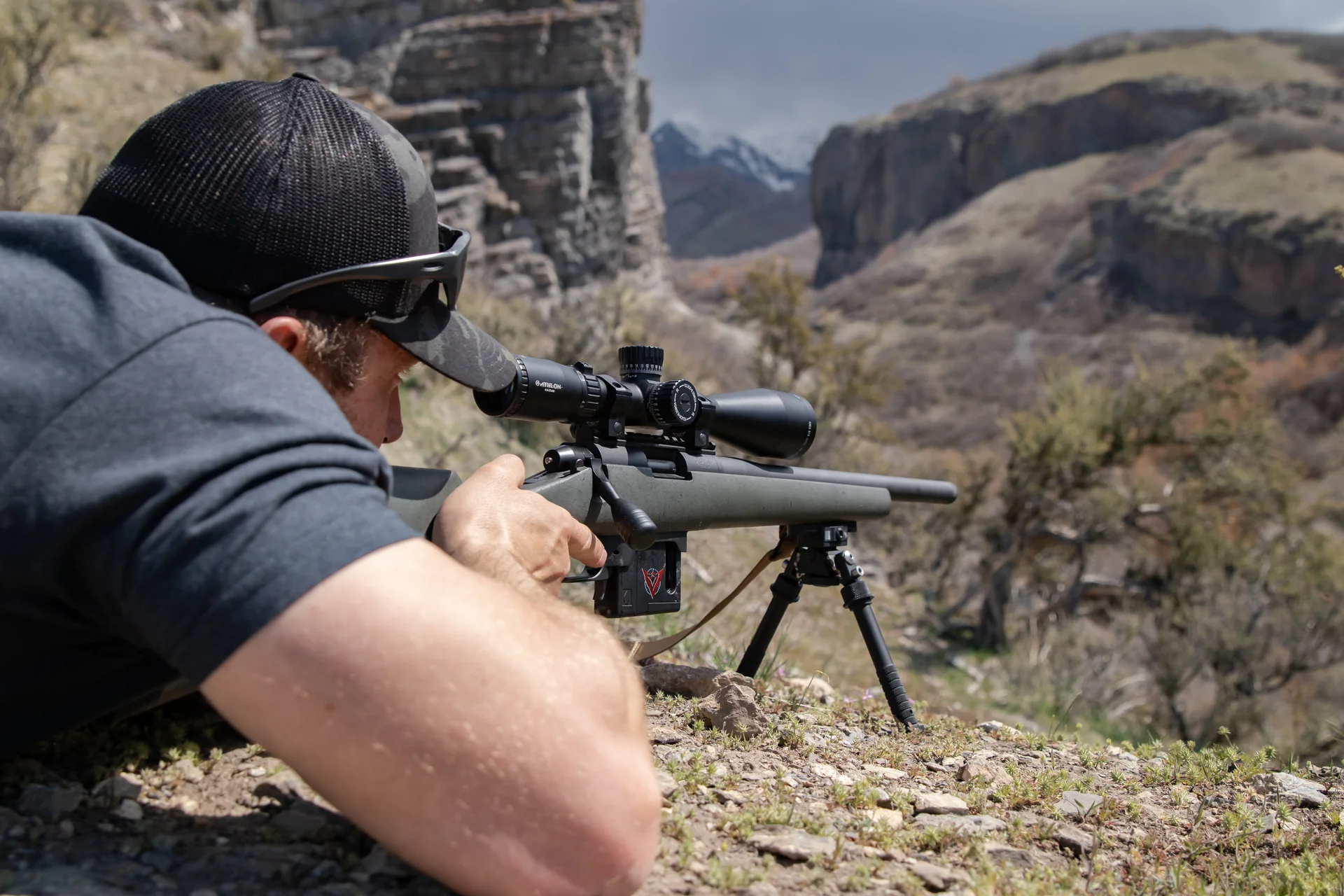
How to Use a Rifle Bipod: Setup, Loading, and Technique
To use a rifle bipod well, get straight behind the rifle, load the legs by driving the rifle forward until they hold tension, build a firm rear support, and break the shot without changing your pressure so the rifle returns to the same point of aim. That one habit, called loading the bipod, is what separates a bipod that helps from a bipod that just holds the rifle up. Everything else is body position and consistency.
Most shooters bolt on a bipod and never learn to load it, which leaves accuracy on the table. This guide covers the full technique: how to set up behind the rifle, how to load the bipod for tighter groups, how to hold steady through recoil, and how to keep the rifle on target after the shot. The same fundamentals apply whether you run an AR, a hunting rifle, or a precision build.
How do you set up behind the rifle?
Good bipod technique starts before you touch the trigger, with your body in line with the rifle. The goal is a relaxed, repeatable position where the rifle points at the target without you muscling it there.
Build a straight line: get your spine roughly behind the bore, shoulder square into the buttstock, and your body weight settled. If you have to fight the rifle back onto target, shift your whole body instead of pushing the gun.
- Get inline: spine behind the bore so recoil tracks straight back.
- Square the shoulder: firm, consistent contact with the buttstock.
- Relax onto natural point of aim: the reticle should rest on target without muscle.
- Set the bipod height low enough to be steady but high enough to clear your line of sight.
How do you load a bipod?
Loading (preloading) the bipod is the core skill. You drive the rifle slightly forward so the legs flex and hold tension against your shoulder. Under recoil the loaded legs push the rifle straight back into the same position, so the reticle returns to the target instead of hopping off it.
• From your inline position, push the rifle forward an inch or two until the bipod legs flex and hold.
• Feel the rifle settle and stop; that steady tension is the load.
• Keep your forward pressure consistent. The same load every shot means the same return every shot.
• If the legs skip or the rifle slides, your feet or the surface need adjusting, not more force.
Why loading tightens groups
An unloaded bipod lets the rifle bounce unpredictably under recoil, throwing vertical shots. A loaded bipod makes recoil repeatable, so the rifle does the same thing every time and your groups shrink. This is why loading is the first technique precision shooters teach.
How do you hold the rifle and break the shot?
With the bipod loaded, your hold should be firm but not tense. Let the position and the load do the work, and keep your inputs consistent so nothing changes between shots.
A consistent rear support is half the equation: a rear bag or an Accu-Shot monopod sets your elevation so both ends of the rifle return together. Squeeze the trigger straight back without disturbing your forward pressure or cheek weld.
- Firm, relaxed hold: enough contact to control the rifle, not a death grip.
- Consistent rear support: rear bag or monopod holds elevation so the whole rifle returns to zero.
- Straight trigger press: break the shot without changing your load or cheek weld.
- Same inputs every time: consistency is what makes the bipod repeatable.
How do you keep the rifle steady after the shot?
Good shooters follow through: they stay in the gun after the shot breaks so they can call it and spot their own impact. With a loaded bipod and a steady rear, the rifle should recoil straight back and settle right onto the target again.
Do not relax the instant the shot breaks. Hold your position and your forward pressure through recoil; the reticle should return to the target. If it lands somewhere else, your load or position was inconsistent, and that is the thing to fix.
Frequently Asked Questions
How do you use a rifle bipod?
Get straight behind the rifle, load the legs by driving the rifle forward until they hold tension, build firm rear support, and break the shot without changing your pressure so the rifle returns to the same point of aim. Loading the bipod is the skill that makes it work.
What does it mean to load a bipod?
Loading, or preloading, means driving the rifle forward so the bipod legs flex and hold tension against your shoulder. Under recoil the loaded legs push the rifle straight back to the same point of aim, which makes recoil repeatable and tightens your groups.
How do you hold a rifle with a bipod?
Get inline behind the rifle with your shoulder square into the buttstock, hold firm but relaxed, and let the loaded bipod and a consistent rear support do the work. Keep your inputs the same every shot and press the trigger straight back without disturbing your cheek weld.
How do you keep a rifle steady after the shot off a bipod?
Follow through: hold your position and forward pressure through recoil instead of relaxing the instant the shot breaks. With a loaded bipod and steady rear support, the rifle recoils straight back and settles onto the target, letting you spot your own impact.
Why won't my rifle return to the target off a bipod?
Usually an unloaded bipod or an inconsistent position. If the legs are not preloaded, the rifle bounces unpredictably. Load the bipod, get inline behind the rifle, build firm rear support, and keep your inputs the same every shot so recoil becomes repeatable.
Put the technique to work
Get inline, load the bipod, support the rear, and follow through. Master loading and your groups will tell you it worked.
Running the right bipod makes loading easier: see the best rifle bipod guide or browse the Atlas lineup built to load and hold.
* * *