
Beginner Guide
The Beginner's Guide to Rifle Bipods
If you are new to shooting and wondering whether you need a bipod, here is the short answer: a bipod gives your rifle a stable two-legged front rest so your shots are steadier and more consistent. It is one of the simplest upgrades that actually makes you better. This guide explains what a bipod does, how to choose your first one without learning a pile of jargon, and why a quality bipod is a buy-once decision. No gatekeeping, no acronyms we do not explain.
What a bipod does (and whether you need one)
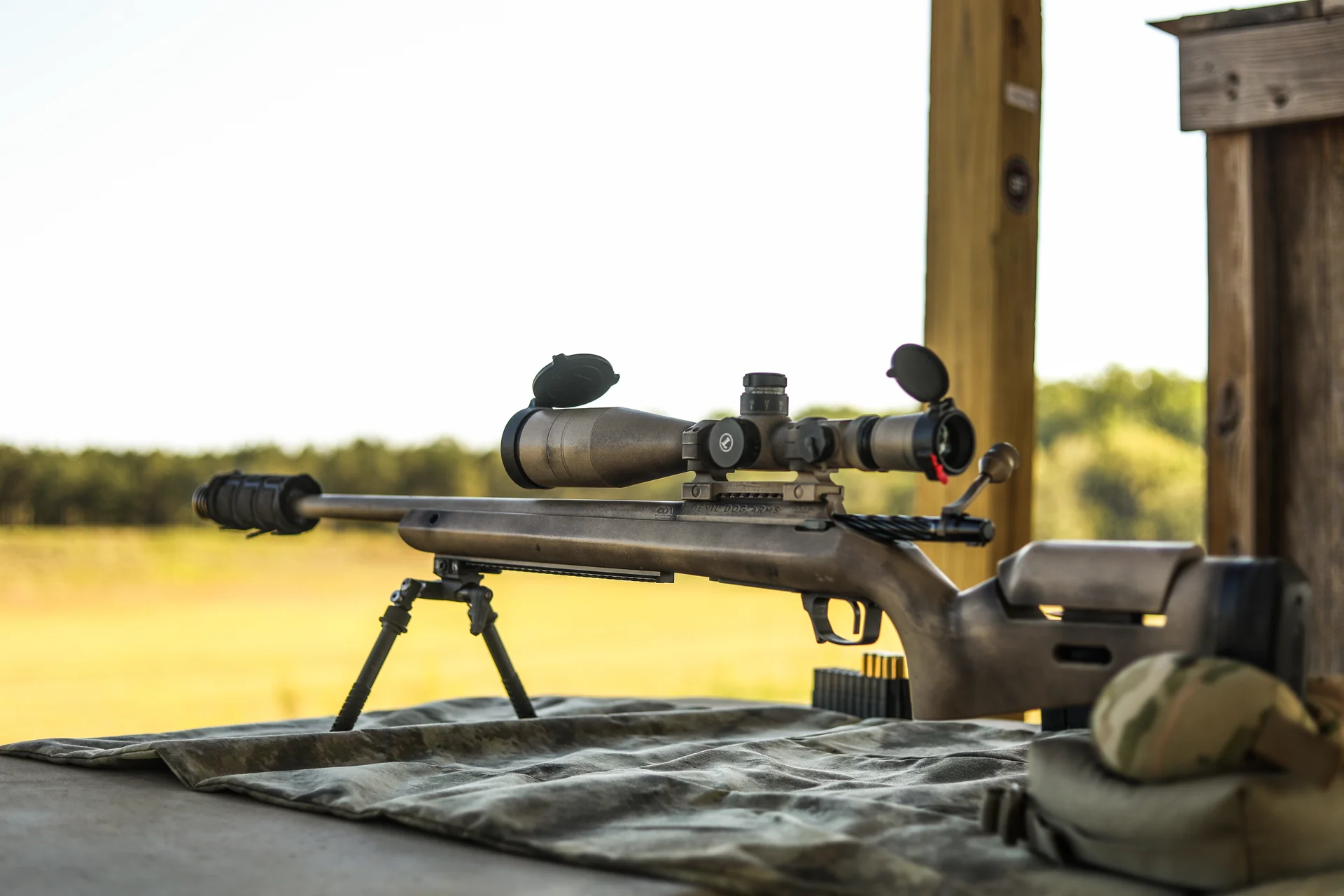
A bipod is a two-legged support that attaches to the front of your rifle and folds out of the way when you are not using it. It steadies the rifle so the crosshairs stop wandering, which makes it easier to shoot tight groups and take confident shots. You do not need to be a competitor or a hunter to benefit. If you shoot prone, off a bench, or want steadier field shots, a bipod helps.
It steadies your aim Two legs on the ground remove the wobble you get holding the rifle’s weight yourself.
It improves consistency A repeatable rest means your misses come from your technique, not a shaky hold, so you learn faster.
It folds away When you do not need it, the legs fold back along the rifle and stay out of the way.
How to choose your first bipod
You only need to get three things right for your first bipod. Ignore the alphabet soup of model codes for now; focus on these.
How it attaches Look under the front of your rifle. A slotted metal rail (Picatinny) or oblong slots (M-LOK) means a bipod mounts directly. A single round threaded post (a sling stud) means you add a small adapter called the BT81 Lil Brandi, which gives you a rail to mount to. No gunsmith needed.
Height Match it to how you shoot. Lying down (prone) needs a lower bipod; sitting or shooting off a bench needs more height. An adjustable Atlas covers several positions, so one bipod grows with you.
Quality you will not replace A cheap bipod wobbles, slips, and breaks. A quality bipod locks solid and lasts for decades.
Why buy once, cry once
It is tempting to grab a $40 bipod to save money, especially after buying a rifle and a scope. Here is the honest tradeoff: budget bipods usually fail at the legs, the adjustments, or the clamp, and you end up buying a second bipod anyway. A quality Atlas is machined in the USA, used by military and law enforcement, and carries a lifetime warranty. If it ever breaks, a real team in Kansas fixes it. Spend once on something that lasts, and you never think about it again.
Keep Reading
Related Guides
Common Questions
Below are quick answers to what shooters ask most, including what fits your rifle, warranty coverage, and pricing.
Frequently Asked Questions
What does a bipod do?
A bipod is a folding two-legged support on the front of your rifle that steadies your aim. It removes the wobble of holding the rifle’s weight yourself, so your shots are more consistent and easier to place accurately.
Do I need a bipod for my rifle?
If you shoot prone, off a bench, or want steadier field shots, yes. A bipod makes it easier to shoot tight groups and learn good fundamentals. It is one of the simplest upgrades that measurably improves consistency.
What size bipod do I need?
Match the height to how you shoot most. Prone shooting needs a lower height; sitting or bench shooting needs more. An adjustable Atlas covers several positions, so a single bipod works across scenarios as you progress.
How do I use a rifle bipod?
Deploy the legs, rest them on a stable surface, and apply slight forward pressure so the legs preload under tension. This loading stabilizes the rifle and helps it return to the same point of aim after each shot.
What is a Picatinny rail?
A Picatinny rail is the slotted metal rail found under the forend of many rifles. It is a standard mounting interface. If your rifle has one, an Atlas bipod clamps directly to it with no adapter.
Are expensive bipods worth it for a beginner?
Yes. A quality bipod locks solid and lasts decades, while cheap ones slip and break. Because an Atlas carries a lifetime warranty and grows with your skills, it is a one-time purchase rather than a repeated expense.
Will I break it if I use it wrong?
Atlas bipods are built to take field use, and every one is backed by a lifetime warranty. If something ever goes wrong, the team repairs it. You can learn and experiment without worrying about ruining your investment.
What is the best first bipod?
For most new shooters, the Atlas V8 (BT10) series is the simplest confident choice. It is rugged, adjusts to several heights, and you will not outgrow it. Add the BT81 adapter if your rifle has sling studs.
Can a bipod improve my accuracy?
A bipod improves consistency by giving the rifle a stable rest, which removes wobble and helps you apply good fundamentals. Your groups tend to tighten because the support is repeatable shot to shot.
Does an Atlas bipod come with a warranty?
Yes. Every Atlas bipod and Accu-Shot monopod is backed by a lifetime warranty. If it breaks, B&T Industries in Kansas makes it right. In plain terms: if it breaks, we fix it.
Not sure where to start? We can help
Take the easy path. See our recommended first bipod, the versatile V8 series, or read the mounting guide to confirm what fits your rifle. If you would rather just ask a person, reach out to our team in Kansas and we will point you to the right setup. We are glad you are here.